

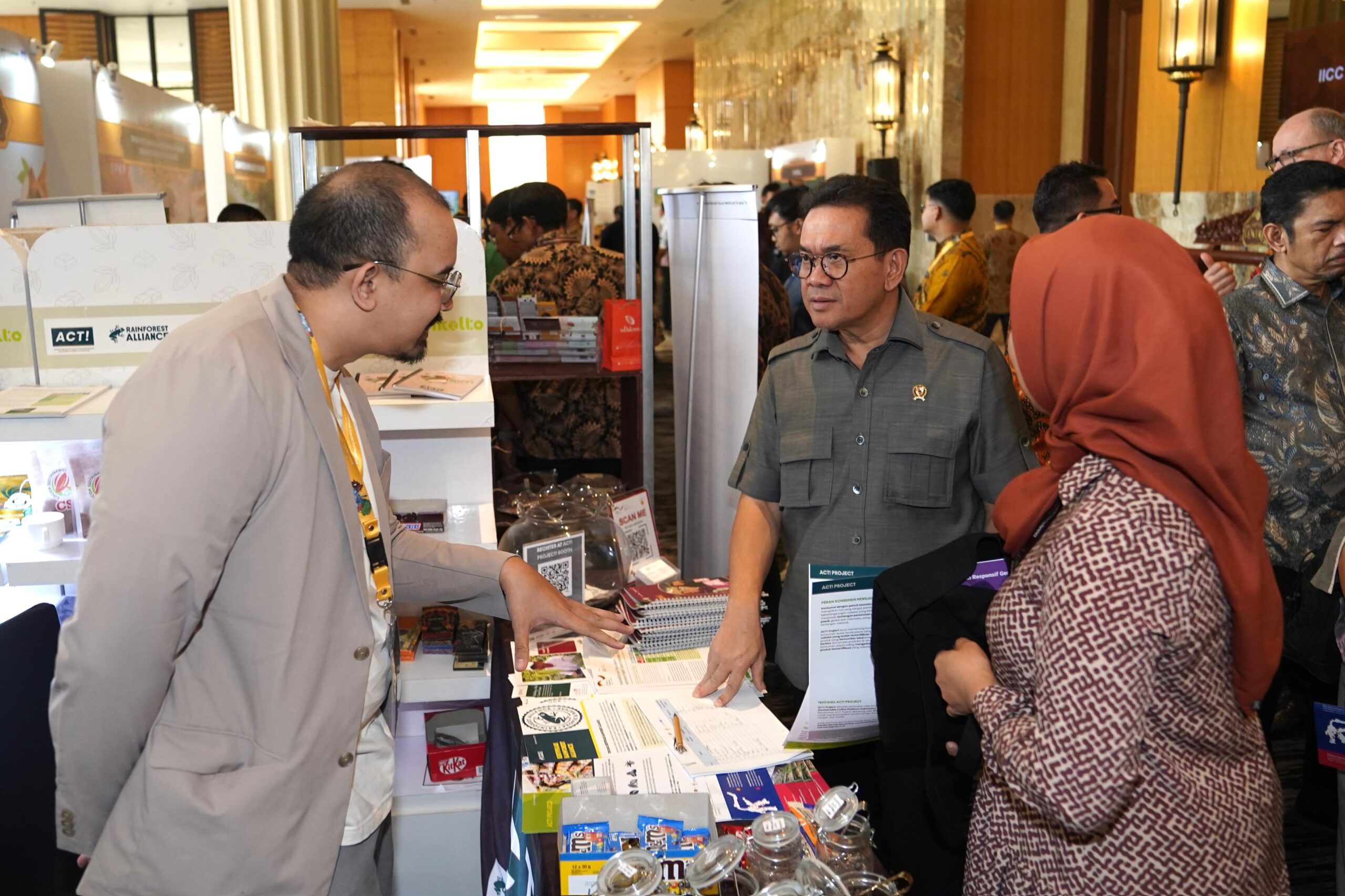
(TheIndoDaily) – Indonesian Trade Minister Budi Santoso emphasized the essential nature of collaboration across various stakeholders for the future of Indonesia’s cocoa industry and its supporting ecosystem. This collaboration involves government bodies, cocoa farmers, business entities, financial institutions, academics, and international partners.
By leveraging these partnerships, the strategic role of Indonesia’s cocoa sector in the global economy is poised to grow even stronger. In the face of challenges, Indonesia is committed to enhancing the value of its cocoa beans.
These insights were shared by Minister Santoso during his keynote address at the “9th Indonesia International Cocoa Conference” (IICC) held in Jogyakarta on July 23, 2026.
“Cocoa continues to support the livelihoods of hundreds of thousands of farming families, create jobs within its value chain, and strengthen rural economies,” Minister Santoso said.
“Being a strategic export product with significant value addition potential, the future of cocoa hinges on stakeholder collaboration. Indonesia’s vision is clear: to become a global hub for sustainable, high-value cocoa and premium chocolate products,” he said.
Over the past five years, Indonesia’s cocoa export performance has been impressive. By 2025, the export value reached USD 3.60 billion, tripling since 2021 when it stood at USD 1.2 billion. This demonstrates a robust global demand for cocoa, including that originating from Indonesia.
The International Cocoa Organization (ICCO) recognizes Indonesia as a producer of premium cocoa, notably fine flavor cocoa. This status affirms Indonesia’s growing potential to cater to the premium cocoa market worldwide. According to Minister Santoso, ongoing innovation, geographical indication factors, and sustainable production are crucial in supporting this endeavor.
“Therefore, Indonesia’s export strategy must continue focusing on enhancing value addition, meeting international standards, diversifying export markets, and capitalizing on international trade agreements,” he added.
Regarding international trade agreements, Indonesia is actively implementing 25 trade agreements with various partner countries and has two more awaiting ratification.
Additionally, there are 11 agreements under negotiation, including talks with the European Union (Indonesia-European Union Comprehensive Economic Partnership Agreement), which are awaiting signature.
Indonesia is also pursuing reciprocal tariff negotiations with the United States (Indonesia-United States Agreement on Reciprocal Trade). Minister Santoso is optimistic that these agreements will bolster competitiveness and market access for Indonesian cocoa.
The Ministry of Trade is undertaking various efforts to boost exports. It has deployed 46 trade representatives in 33 countries to spearhead strategies for increasing the export of Indonesian products.
These trade representatives are tasked with promoting Indonesian goods, identifying market opportunities globally, and facilitating business matchmaking between Indonesian exporters and potential international buyers. “Feel free to contact us and our representatives abroad,” Minister Santoso encouraged.
Meanwhile, Vice President & Managing Director of Cargill for Southeast Asia, Australia, and New Zealand also spoke at the conference. He highlighted that the future of Indonesia’s cocoa sector looks promising but depends on stakeholder collaboration and innovation.
Consumers are increasingly interested in authenticity, local sourcing, sustainable agriculture, and new textures and flavors. This trend provides Indonesia with an opportunity to strengthen its role as a processing and innovation hub for Asia and beyond.
Michel Arrion, Executive Director of the International Cocoa Organization (ICCO), who attended the conference, noted its significance in assessing Indonesia’s progress in the cocoa sector. Originally a producer, Indonesia is evolving into a cocoa processor.
“Indonesia adds significant value to cocoa beans for the chocolate industry. We are confident that as Indonesia increases production, it will reap even greater benefits,” Michel remarked.
Oleh Staff Writer
Edited by Roffie Kurniawan